
 Our Purpose
 Our Vision
 Core Value
 Meet Our Team
 Business Roadmap
 Industry Awards
 Recognized Event Agency
 As Seen On
 Trusted By The Global Fortune 500
 Corporate Event Account
 Project
 Marketing
 Creative
 HR & Finance
 Internship
 Sustainability
 United Nations Global Compact
 ESG Policy
 Projects
 FAQs
 Strategy & Tips
 Newsletter
 eBook
 Events
 Branding & Marketing
 Conference Management
 Innovative Technology
 Creative Visual
 Production

Strategy & Tips
What Can an Event Planner Offer for Corporate Events?
22 November 2026
What Can an Event Planner Offer for Corporate Event Planning?
Article Summary
An event planner runs a corporate event as a project, not a party. They set the goal, build and police the budget, brief and chase every supplier, hold the schedule on the day, and report on results afterwards. Most of the work is project management rather than decor.
Planning for a large event starts 8 to 12 months ahead.
A planner tracks costs and flags a wrong number early.
A single point of contact replaces briefing and chasing ten suppliers yourself.
Backup plans keep speaker and supplier failures away from guests.
Hire one when senior guests, many suppliers or fixed dates apply.
Picture this. Your CEO asks you to organise a leadership summit in four months. You already have a full workload, and you have never managed a venue, a stage and ten suppliers at the same time.
This is when most teams start to look for a corporate event planner. A good one does much more than book a venue. They manage the whole project, from the first idea to the final report. In this article, Above Creative Events (a.c.e) explains what a planner offers, and how we work, so you know what to expect.

What Does an Event Planner Actually Do?
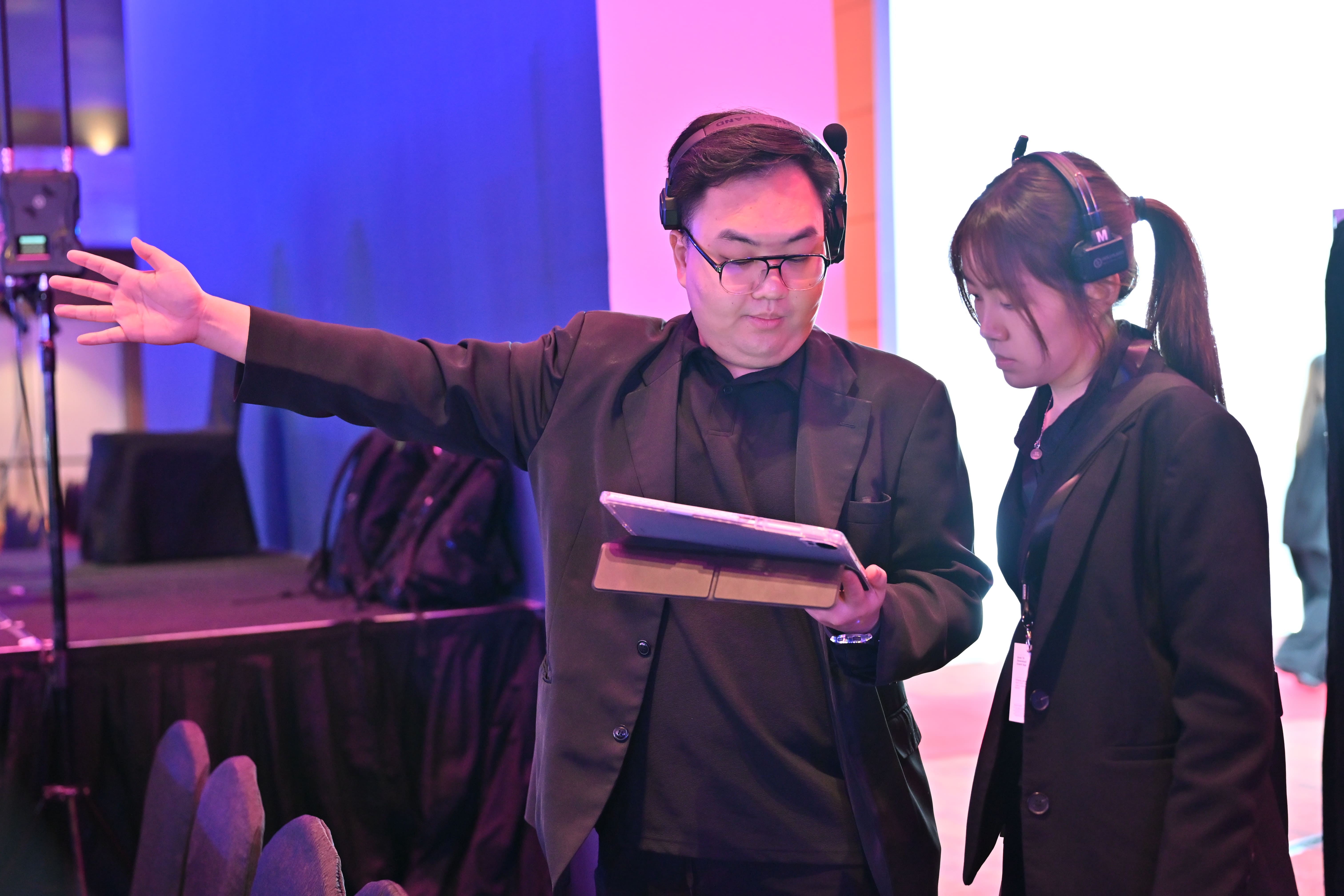
An event planner runs the project behind the event. That means planning, budgeting, scheduling, briefing suppliers and solving problems before guests notice them. Decor and catering are part of it, but they sit at the end of a much longer chain of decisions.
Many people think this job is only about decor and food. In practice, most of the work is project management. For corporate events, the planner also protects your brand. Every detail says something about your company, from the invitation to the stage backdrop, and a good planner keeps all of it consistent.
What Can an Event Planner Offer Your Business?
Five things, in order of when you feel them: a plan anchored to a real goal, control over a budget that is under pressure, a single point of contact for suppliers, tested backup plans, and someone holding the schedule on the day with a report afterwards.
1. A clear plan from the start
A planner begins with your goal. Is the event for sales, staff morale or a product launch? The goal decides the venue, the programme and the budget. The event timeline from Eventbrite starts planning 8 to 12 months before the event date, so early work matters.
2. Control over your budget
Costs are rising. A Skift Meetings survey of more than 100 in-house corporate event professionals, published in its Corporate Meetings in 2026 report, found that 79% saw expenses grow by at least 5% in a year. Nearly half said their budgets did not change. A planner tracks every cost, collects several quotes and warns you early when a number looks wrong.
3. One point of contact for suppliers
a.c.e does not run production in house. Instead, we manage a trusted network of vendors and suppliers directly on your behalf. You speak to one team, and we brief and follow up with everyone else.
4. Plans for when things go wrong
Imagine your keynote speaker’s flight is delayed two hours before the doors open. A planner already has a backup plan, such as moving another session forward. Guests see a smooth day, and the problem stays behind the scenes.
5. Control on event day and a report afterwards
On the day, the planner runs the schedule and makes quick decisions. After the event, they collect feedback and share results. This shows you what worked and what to change next time.

When Should You Hire an Event Planner?
Hire one when the event stops being something your team can absorb alongside its day job. The usual triggers are senior or external guests in the room, several suppliers who must work together, a fixed date that cannot slip, and a team with no spare capacity.
You do not need a planner for every meeting. A small team lunch is easy to manage yourself. Consider hiring one when these points apply:
Your team has no time to manage a full project.
Senior leaders, clients or media will be in the room.
You need many suppliers to work together.
The date is fixed, and a delay would cost you money.
If two or more of these sound familiar, speak to a planner early. Starting late limits your choice of venues and suppliers. Our guide on when to hire an event planner versus doing it yourself works through the same decision in more detail.
Is a planner the same as an event management agency?
The titles overlap, but the scope usually differs. The table below compares the two.
a.c.e offers both, through full conference management and event management, so you deal with one team rather than stitching the two roles together yourself.
How Does a.c.e Work With You?
a.c.e runs every project through five stages: Initial Inquiry, Event Shaping, Pre-Event, Setup and Event Day, and Post-Event. First we learn your needs, then we prepare a proposal covering services, budget and logistics. The stages stay the same whatever the event size.
Initial Inquiry
Event Shaping
Pre-Event
Setup and Event Day
Post-Event
a.c.e plans conferences, AGMs and EGMs, product launches, gala dinners, exhibitions and team building events, so the same team can act as your conference event planner in Malaysia on one project and your gala dinner event planner in Malaysia on the next. Read more about our corporate event services.
In 2025, a.c.e won Event Management Excellence for B2B Corporate Event at the Malaysia Business Events Awards. You can also see our past event projects, such as the SCxSC Fintech Summit and the Ummi Medilife Annual Dinner.
Frequently Asked Questions
1. What does an event planner do for corporate events?
A planner manages the whole project. This includes the budget, the venue, suppliers, the schedule and event day, and they report on results afterwards. The job is closer to running a project with a fixed, immovable deadline than to decorating a room, which is why planning experience matters more than taste.
2. How much does an event planner cost?
Fees depend on the size of the event, how long it runs and the services you need. Some planners charge a fixed fee. Others charge a share of the event budget. Ask for a written quote after you share your brief, and ask what sits outside the fee so you can compare quotes properly.
3. How early should I hire an event planner?
As early as you can. For a conference of 200 or more guests, we suggest starting 6 to 9 months before the event. This gives you more choice of venues, speakers and suppliers. Conference planning started late usually costs more, because you lose the ability to negotiate.
4. Can a planner work with my in-house team?
Yes, and many corporate events run this way. Your team keeps the content, the guest list and the internal approvals, while the planner takes the venue, the suppliers and event day. Agree who owns each task in writing before planning starts, because the gaps between the two lists cause most problems.
5. What should I prepare before meeting an event planner?
Bring your event goal, a rough budget and your expected guest numbers. Add your preferred dates and the names of the people who approve decisions. Even a short brief helps a planner give you a useful first proposal, and it saves a round of questions before you see any costings.
Conclusion
A good event planner gives you time, control and fewer surprises. They plan early, manage costs, coordinate suppliers and stay in charge on event day. Your team can then focus on its own work and on your guests.
a.c.e has delivered events for Global Fortune 500 companies, GLCs, MNCs and PLCs, acting as a single point of contact and managing the vendor network on our clients’ behalf. You do not have to plan a corporate event alone. If you are planning one now, contact us and tell us what you need.
About Above Creative Events (a.c.e)
a.c.e is the 1st Certified B Corp Corporate Event Agency in Southeast Asia, meeting B Lab's integrated social, environmental, and governance standards.
a.c.e is also an award-winning events agency specialising in conferences, leadership summits, corporate townhalls and large-scale multinational events. Since 2007, a.c.e has been known as the "Magic Makers", combining creative ideas with disciplined execution to bring events to life for GF500, GLCs, MNCs and PLCs. We transform imagination into reality so that our clients can strengthen their brand and amplify their market presence.
If you need any service in any aspect of event planning, drop us a message or an email. Visit our website to know more!





Let's Talk