
 Our Purpose
 Our Vision
 Core Value
 Meet Our Team
 Business Roadmap
 Industry Awards
 Recognized Event Agency
 As Seen On
 Trusted By The Global Fortune 500
 Corporate Event Account
 Project
 Marketing
 Creative
 HR & Finance
 Internship
 Sustainability
 United Nations Global Compact
 ESG Policy
 Projects
 FAQs
 Strategy & Tips
 Newsletter
 eBook
 Events
 Branding & Marketing
 Conference Management
 Innovative Technology
 Creative Visual
 Production

Strategy & Tips
ESG Malaysia: Key Reporting Deadlines Companies Should Know
12 November 2026
ESG Malaysia: Key Deadlines Companies Should Know
Malaysia’s ESG reporting rules do not arrive all at once. They arrive in three waves, and each wave has its own start year. If you are not sure which wave your company is in, you may lose months of preparation time.
This guide sets out the key ESG Malaysia deadlines in plain terms, and what to do about them. We also explain how events are connected to this, because event data and stakeholder meetings are used in your reports. It comes from the team at Above Creative Events, a corporate event agency in Kuala Lumpur.

What Rules Sit Behind ESG Malaysia Reporting?
ESG Malaysia reporting is governed by the National Sustainability Reporting Framework (NSRF), launched at the Securities Commission Malaysia in September 2024. It adopts the ISSB’s IFRS S1 and IFRS S2 standards for listed companies and large non-listed companies, and Bursa Malaysia has written the requirements into its Listing Requirements.
The National Sustainability Reporting Framework was developed by the Advisory Committee on Sustainability Reporting (ACSR), a group chaired by the Securities Commission that includes Bank Negara Malaysia and Bursa Malaysia.
The NSRF uses two global standards from the ISSB as its base. IFRS S1 covers general sustainability risks and opportunities. IFRS S2 covers climate disclosures. The rules apply to companies listed on the Main Market and ACE Market, and to large non-listed companies with annual revenue of RM2 billion or more. The Edge Malaysia reported in 2024 that about 260 non-listed companies fall into that last group.
Bursa Malaysia then changed its own rules to match. It issued a Bursa Malaysia consultation paper in September 2024 on changes to its Listing Requirements, and it amended the Main Market and ACE Market rules in December 2024. For listed companies, this makes ESG Malaysia reporting part of the listing rules.
The Securities Commission says the aim is to give investors consistent, comparable and reliable information. Listed companies already report climate information under the TCFD recommendations, so the ISSB standards should feel familiar. They build on the same pillars: governance, strategy, risk management, and metrics and targets.
This article is general information. It is not legal or audit advice, so please confirm your dates with your adviser.
When Do ESG Malaysia Deadlines Start for Each Group?
The NSRF phases companies in over three years. Main Market companies with a market capitalisation of RM2 billion or more started in 2025. Other Main Market companies start in 2026. ACE Market companies and large non-listed companies with annual revenue of RM2 billion or more start in 2027.
The years below are start years. Your own deadline depends on your financial year end, so map each start year to your company calendar.
The table below compares the three NSRF groups by who is covered, when reporting starts and when assurance becomes mandatory.
Group | Who is covered | Reporting starts | Scope 1 and 2 assurance |
| Group 1 | Main Market companies with market capitalisation of RM2 billion or more | 2025 | 2028 |
| Group 2 | Other Main Market listed companies | 2026 | 2029 |
| Group 3 | a.c.e Market companies and non-listed companies with annual revenue of RM2 billion or more | 2027 | 2030 |
Every group begins with climate disclosures, and adds other sustainability topics later. Some transition reliefs also apply in the first years, so check the exact dates for your financial year end. One example is the option to leave out Scope 3 emissions, which cover supplier and value chain activity, in the first reporting periods.
What About Assurance?
In September 2026, the ACSR moved mandatory reasonable assurance back by one year. Assurance of Scope 1 and Scope 2 greenhouse gas emissions now starts in 2028 for Group 1, 2029 for Group 2 and 2030 for Group 3. The SC said a review of the first 91 Group 1 issuers by the Minority Shareholders Watch Group and Climate Governance Malaysia found disclosure quality still needed work.
Until then, listed companies must state whether their sustainability disclosures were reviewed by internal auditors or independently assured. Independent assurance must follow the ISSA 5000 standard.
What Should Companies Do Now to Prepare?
Start by confirming your NSRF group and start year, then compare your current disclosures with IFRS S1 and S2. Begin collecting emissions data now, including travel and supplier activity, and give one person ownership of ESG data so every department reports it in the same way.
You do not need to be a listed company to be affected by these rules. Large customers may ask their suppliers for the same data. Here is a simple way to start.
Confirm which group your company belongs to, and note the start year.
Compare what you report today with IFRS S1 and S2, and list the gaps.
Start collecting emissions data now, including travel and supplier activity.
Name one owner for ESG data, and agree how each department shares it.
Talk to your vendors early. If your event suppliers can share travel and energy data, your team will not need to collect it at the last minute.
How Do Corporate Events Feed Into ESG Malaysia Reporting?
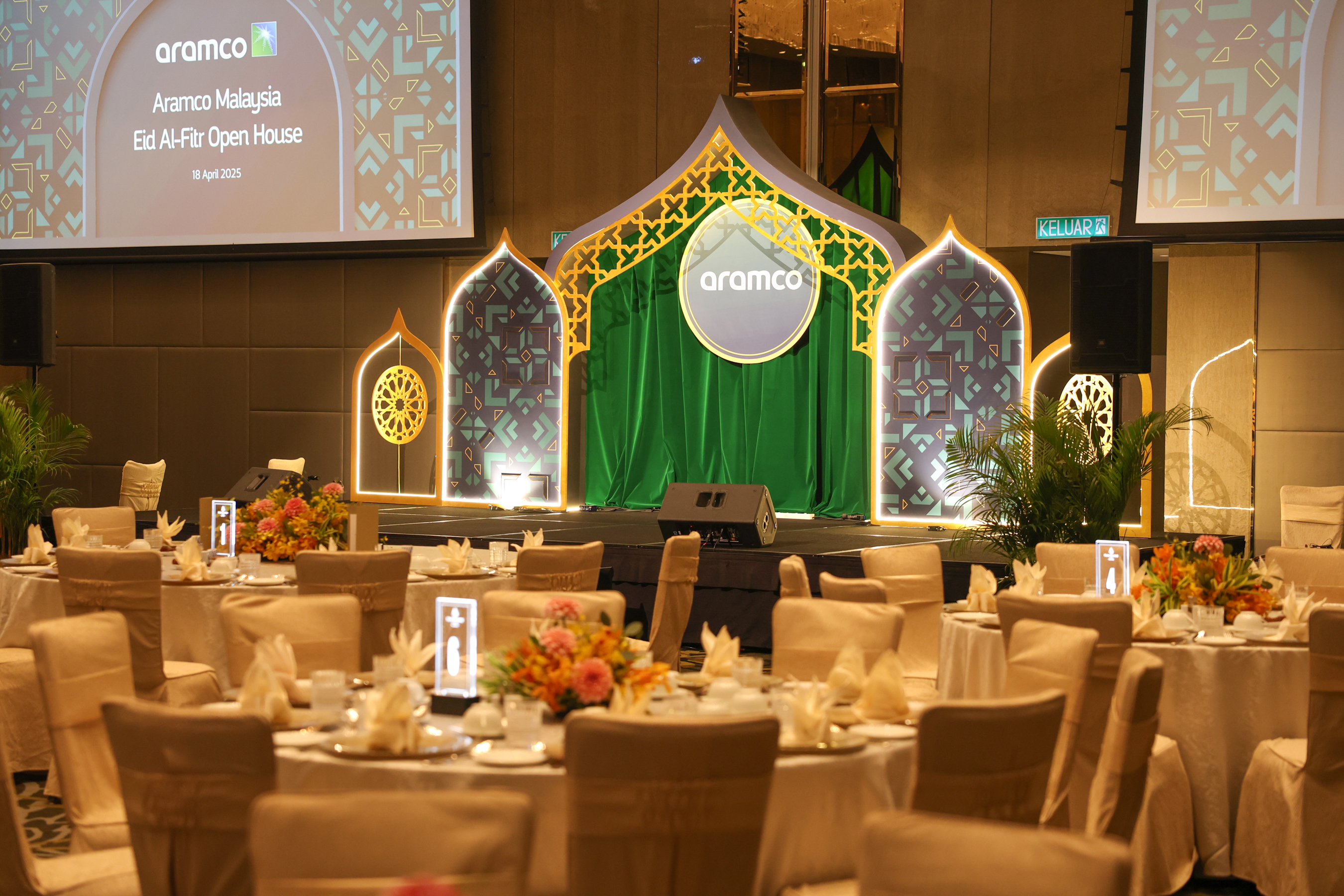
Corporate events feed into ESG Malaysia reporting in two ways. A conference, townhall or annual general meeting creates travel, energy, food and vendor data that belongs in your emissions figures. It also puts your stakeholders in one room, where you can explain your ESG story in person.
Good records from these events make reporting easier.

a.c.e is recorded in the Malaysia Book of Records for organising the most virtual AGMs in a month, so we know what listed companies need from their shareholder meetings. In 2025, we also won ESG Practices Excellence at the Malaysia Business Events Awards, and you can read about our own approach in our ESG policy. We coordinate a trusted network of vendors and suppliers on our clients’ behalf, which helps when you need the same data from every supplier.
Frequently Asked Questions
1. What is ESG Malaysia reporting?
It is the sustainability reporting that listed and large non-listed companies in Malaysia must now prepare under the NSRF. It uses the ISSB standards IFRS S1 and IFRS S2, and it starts with climate disclosures. Over time, companies add their other material sustainability risks and opportunities, reported in a set format that investors can compare across companies and years.
2. Which companies must follow these rules?
Companies listed on the Main Market and ACE Market, and large non-listed companies with annual revenue of RM2 billion or more. Smaller companies are not directly covered, but larger customers may still ask them for data. The SC’s Simplified ESG Disclosure Guide gives SMEs a lighter starting point.
3. When does my company have to start?
Group 1 started in 2025, Group 2 starts in 2026 and Group 3 starts in 2027. Check your group and your financial year end with your adviser. The start year applies to reporting periods that begin in that year, so a company with a June year end will publish its first NSRF report later than one with a December year end.
4. Is sustainability assurance mandatory in Malaysia?
Yes, but not yet. Reasonable assurance of Scope 1 and Scope 2 emissions becomes mandatory from 2028 for Group 1, 2029 for Group 2 and 2030 for Group 3, after the ACSR pushed the dates back by a year in September 2026. Until then, listed companies must disclose whether their figures were internally reviewed or independently assured.
5. How can events support ESG Malaysia reporting?
Events produce data on travel, energy, waste and vendors, and they let you engage stakeholders. If you build data collection into the event brief, the numbers arrive ready for your report instead of being chased afterwards. See our corporate event services to learn how we work with clients.
Conclusion
The ESG Malaysia deadlines come in stages, but they all ask for the same thing. Companies need reliable sustainability data, and they need it in a set format.
Start with your group, your start year and a simple data plan. Then check that your events and vendors can supply the numbers you will need. Early preparation is much easier than fixing gaps at year end.
Know your group, know your date, and start collecting the data now.
If you want to plan events that support your ESG reporting, speak to our team at Above Creative Events.
About Above Creative Events (a.c.e)
a.c.e is the 1st Certified B Corp Corporate Event Agency in Southeast Asia, meeting B Lab's integrated social, environmental, and governance standards.
a.c.e is also an award-winning events agency specialising in conferences, leadership summits, corporate townhalls and large-scale multinational events. Since 2007, a.c.e has been known as the "Magic Makers", combining creative ideas with disciplined execution to bring events to life for GF500, GLCs, MNCs and PLCs. We transform imagination into reality so that our clients can strengthen their brand and amplify their market presence.
If you need any service in any aspect of event planning, drop us a message or an email. Visit our website to know more!




Let's Talk